
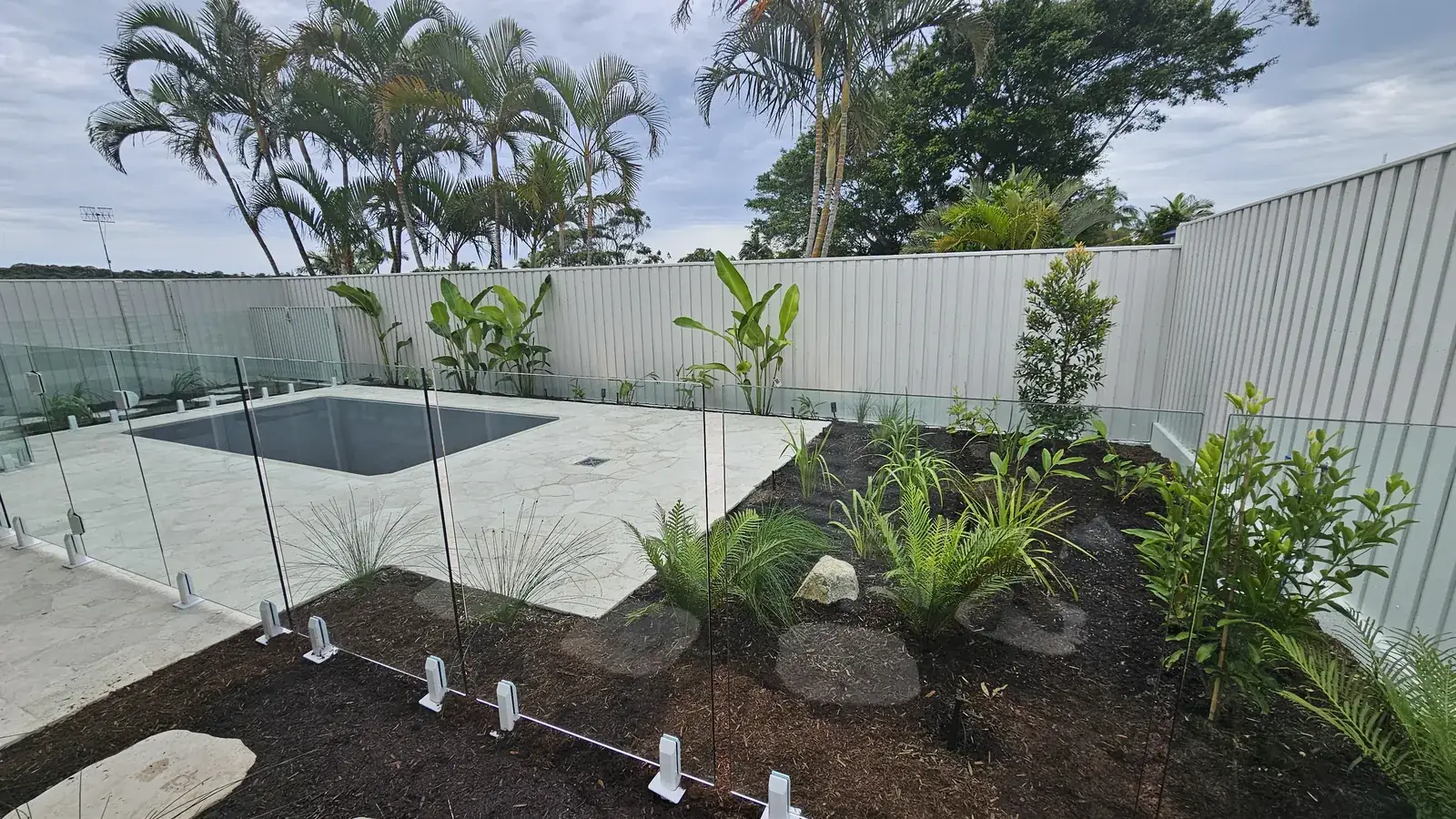
Asking what a plunge pool costs is like asking how long a piece of string is. The pool is the cheap part. The crane, the ground, the fence and the surrounds set the price. For early planning, our indicative installed range is $40,000 to $200,000. We confirm the scope and price after a site visit.
This is what actually drives the cost, what the approvals involve, and where people get caught out.
What does a plunge pool cost?
Most prices you see online are for the pool. You don't swim in a price list. You swim in a pool that has been craned in, levelled, plumbed, wired, fenced and certified. That is where the money goes.
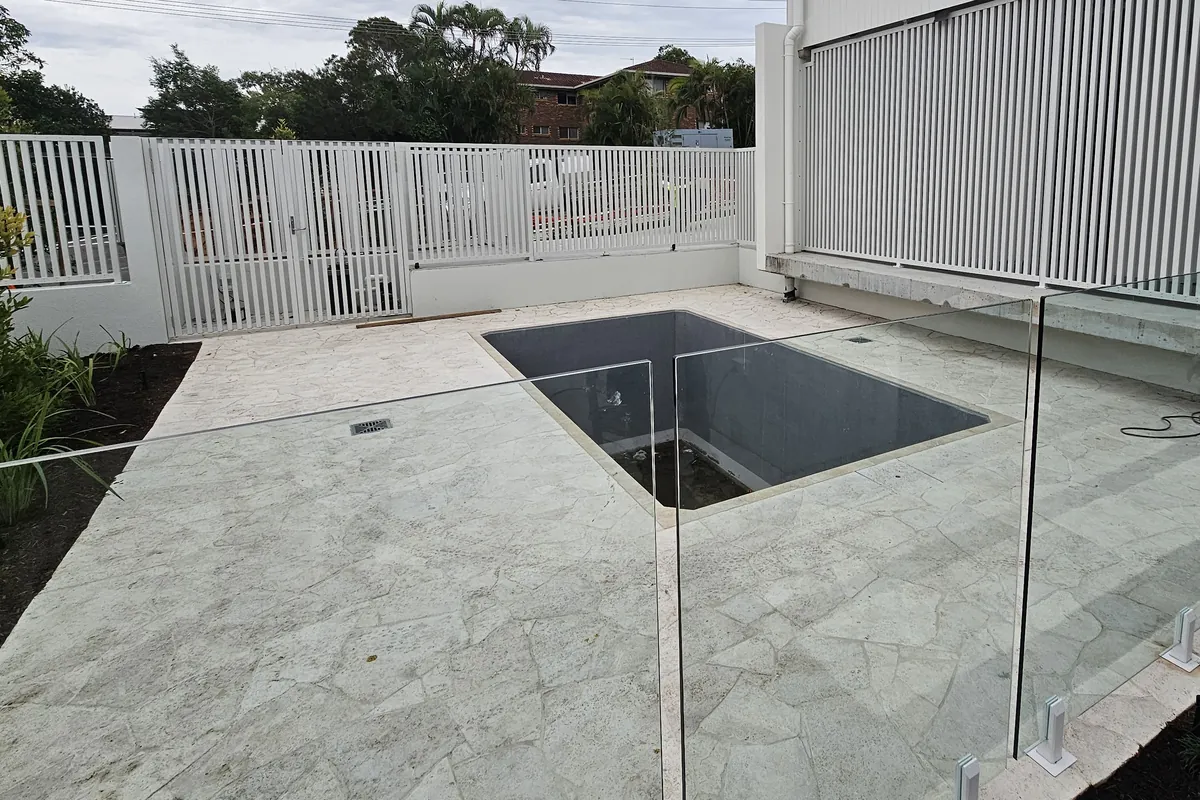
On our Peregian Beach job, the pool itself was just over a quarter of the job cost. The rest went into engineering, screw piles, brickwork and the glass pool fence. At Doonan, the job also needed bored piers and structural steel.
So I don't quote off a brochure. I look at the site first, then give you a fixed price.
These six things move the price most:
- Access. Can a crane reach the back of the block? If it can't, you need a bigger crane or more labour.
- What is under the ground. Rock, sand, sewer lines or a high water table all add site work. You don't know until someone looks.
- The fence. A new glass or aluminium fence is a big part of the cost. A compliant fence you already have can save real money.
- Surrounds. Decking, paving and landscaping. Easy to forget. Never free.
- Equipment. Filtration is standard. Heating, lighting and automation cost more.
- Power and plumbing. How far it is to the switchboard and to drainage.
Is a plunge pool cheaper than a regular pool?
Usually, yes.
A smaller pool means less digging, less water, less chemical and a shorter fence. But the approvals, the crane, the equipment and much of the fence cost about the same whatever the size. Compare the full installed price. Never the price of the shell.
Do you need approval for a plunge pool in Queensland?
Yes, in most cases. Small pool, same rules.
For a permanent residential plunge pool, arrange building approval before construction. The certifier will assess the pool and barrier plans. Your council can advise whether the site also needs planning approval.
If your pool is covered, you must:
- Get building approval from a building certifier before work starts.
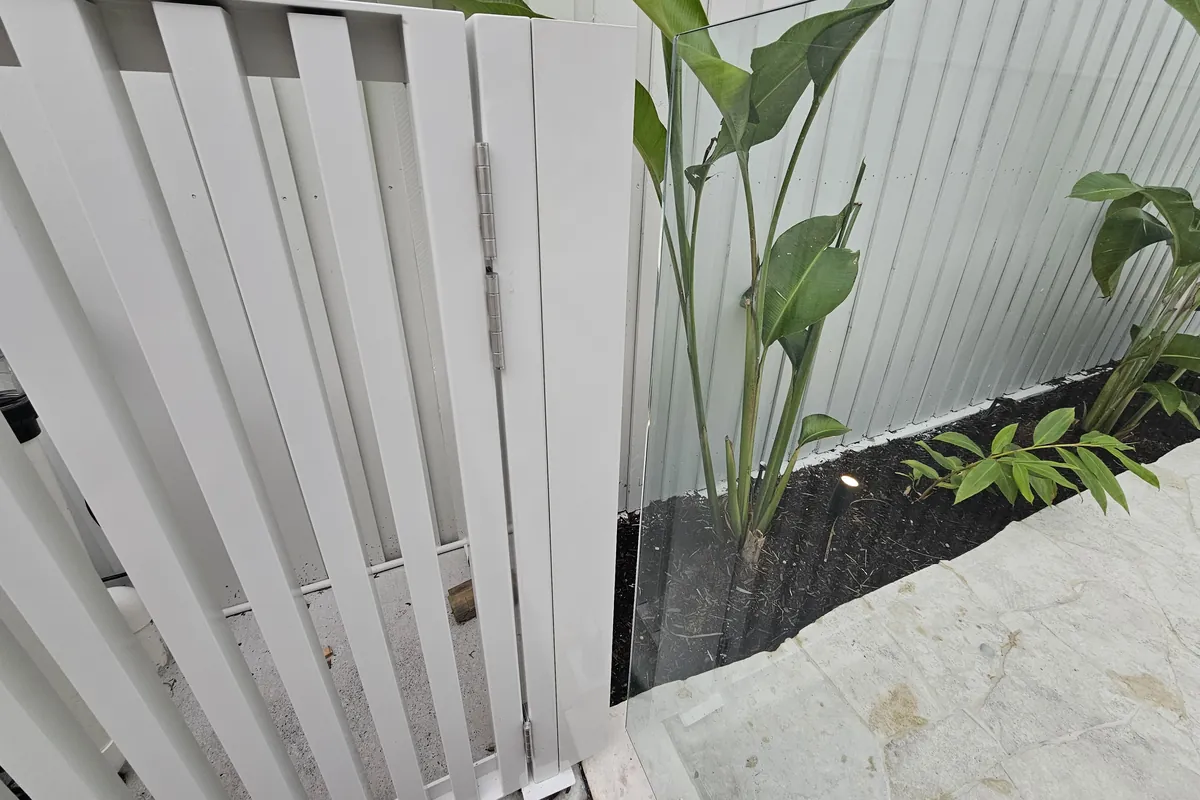
- Build a pool fence that meets the pool safety standard.
- Have the approving building certifier inspect and certify the barrier before the water reaches 300 mm.
- Register the pool with the QBCC.
Some sites also need planning approval, for example where a planning overlay applies. We do the approvals for you. We prepare the drawings, deal with the certifier and Council, and book the fence inspection. You don't chase paperwork.
Pool fence rules in Queensland
The fence is where people get caught out. The law calls it a barrier, and small things fail it: a gap that is too wide, a pot plant too close, a gate that doesn't latch. These are the main rules from the QBCC:
| Rule | Requirement |
|---|---|
| Height | At least 1200mm from finished ground level, at every point along the fence |
| Gap at the bottom | No more than 100mm |
| Non-climbable zone | Rail spacing and nearby climbable objects both matter. Have the certifier check the non-climbable zone for your fence design. |
| Glass fences | Check that fixings and ledges on the outside cannot provide a foothold. |
| Gates | Must close and latch on their own |
| Boundary fences | Ask your certifier to assess both sides of a shared fence, including ground levels, rails and nearby climbable objects, before relying on it as the barrier. |
| Selling or leasing | Certificate requirements depend on the sale or lease and whether the pool is shared. See the QBCC guidance on Form 36. |
A plunge pool needs less fence than a big pool. The rules don't change. Plan the fence with the pool, not after it.
Precast, fibreglass or concrete built on site?
| Type | How it is made | Time on site | Best for |
|---|---|---|---|
| Precast concrete | Made in a factory, then craned into place | Short | Fast installs, little disruption, a solid concrete shell |
| Fibreglass | A factory-made shell, craned into place | Short | Standard shapes |
| Concrete built on site | Formed and sprayed in the hole | Weeks | Custom shapes and sizes |
We install precast concrete plunge pools. The pool turns up finished and goes in by crane. Your yard is dug up for less time, and fewer trades walk through it.
This isn't new for us. We've installed six precast plunge pools across our Wyandra and Palmera homes in Noosa, plus stand-alone pool projects at Peregian Beach and Doonan.
Which plunge pool? The sizes we install
These external dimensions give you a sense of the space a precast pool takes up. Allow room around the shell for the barrier, equipment and access.
| Shape | Size (external) |
|---|---|
| Square | 2.2m x 2.2m |
| Round | 3.5m diameter |
| Rectangle | 3.6m x 2.2m |
| Rectangle | 4.6m x 2.5m, 14,000 litres |
| Rectangle | 6m x 3m |
Pick the pool for the block, not the brochure. A small round pool suits a courtyard. A 6m pool lets you swim a few strokes. Crane access often makes the decision for you. We sort it out at the site visit.
How we install a plunge pool
- Site visit. We check access, levels, services and the best spot for the pool.
- Design and approvals. We draw the pool, fence and surrounds, then lodge for building approval.
- Site preparation. Excavation, the base and services.
- Crane day. We lift the pool in and set it level.
- Fence, surrounds and equipment. Then the certifier inspects the fence.
- Fill and handover. We help you register the pool with the QBCC.
Timeline: 1 to 6 months from first visit to first swim. It depends on the pool size, your location and what the install needs. Crane day itself is short. The time goes into approvals, site works, the fence and the surrounds. If someone promises you a pool in a week, they are talking about crane day.
FAQs
How much are plunge pools in Queensland?
Our indicative planning range is $40,000 to $200,000 installed. Access, site works, the fence and the surrounds make the biggest difference. The pool is the smaller part.
How long does a plunge pool take to install?
Usually 1 to 6 months from first visit to first swim. Crane day is short. Approvals, site works and the fence take the time.
Is a plunge pool cheaper than a regular pool?
Usually, yes. But approvals, the crane, equipment and the fence cost much the same, so the saving is smaller than the size difference.
Do I need council approval for a plunge pool?
You need building approval from a building certifier. You need planning approval only where your site triggers it, for example an overlay.
How high does a pool fence need to be in Queensland?
At least 1200mm from finished ground level, with no gap under it bigger than 100mm.
Can I fill the pool as soon as it is in?
Before the water reaches 300 mm, the building certifier who approved the pool must inspect and certify the barrier.
ARCHEND is a family-run builder based in Noosaville. QBCC licence 15143882. Builder of Lagune, HIA Queensland Apartment of the Year 2025, with Joe Adsett Architects.